Last Updated: May 2026
7 Common Wheel Strategy Mistakes Traders Make
The Wheel strategy is simple, but simple does not mean easy. Most mistakes come from impatience, weak stock selection, or treating premium as income before risk is fully understood.
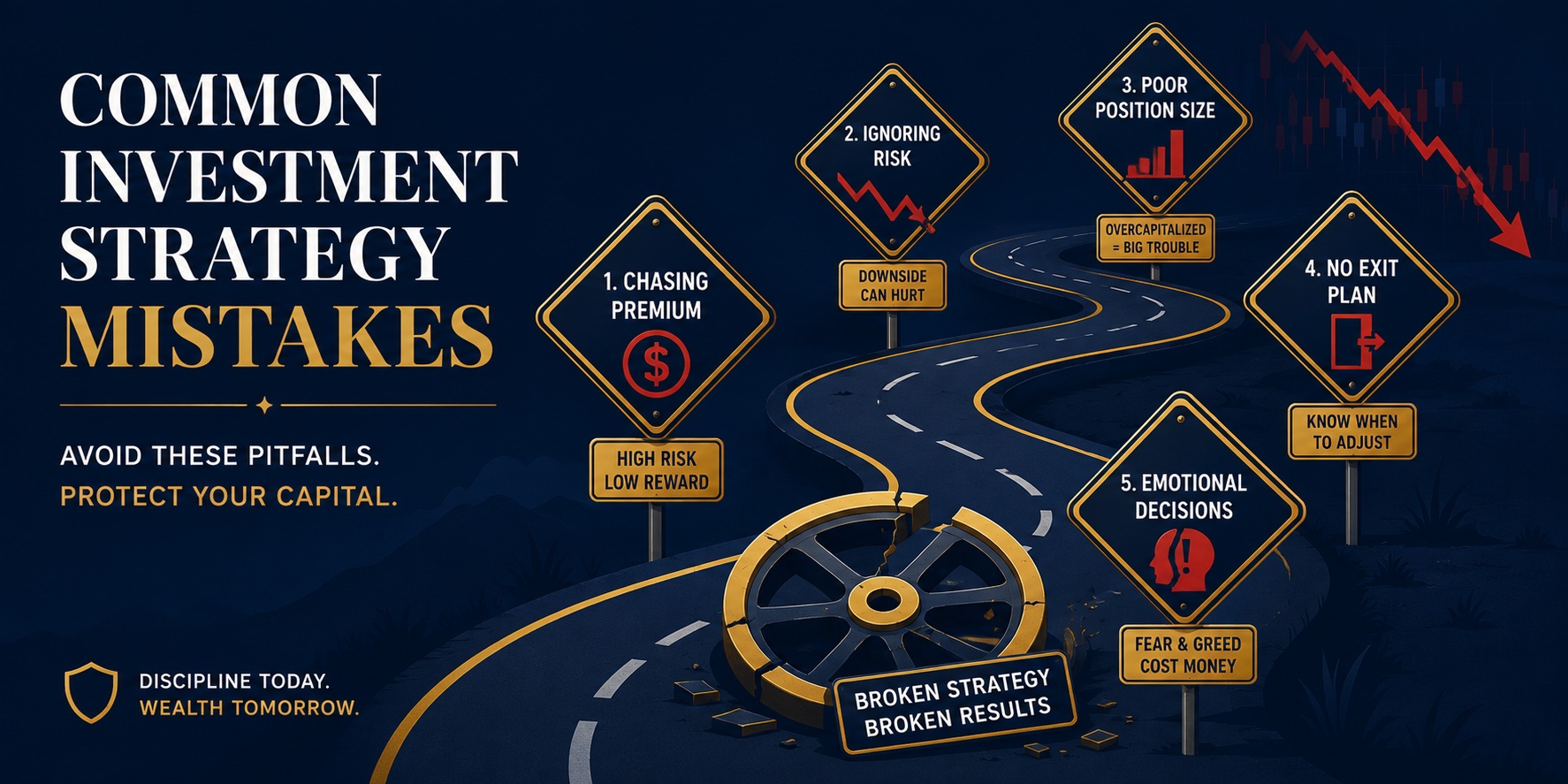
Mistake #1: Picking the Wrong Stock
A high premium on a weak ticker is not a bargain. It is often compensation for real danger. If the company drops sharply, the premium will not feel nearly as important as the capital tied up in shares.
Begin with stocks you would willingly own. Then ask whether the option premium is worth the obligation. That order matters.
Mistake #2: Selling Too Close to Earnings
Earnings can create overnight gaps that ignore your strike selection. The premium may look appealing because implied volatility is elevated, but the event risk can overwhelm the normal Wheel process.
Some experienced traders knowingly sell around earnings. Beginners are usually better served by waiting until the event passes.
Mistake #3: Ignoring Implied Volatility
Low volatility can produce tiny premiums that do not justify the capital. Extreme volatility can signal a stock that may move far more than expected. The sweet spot is somewhere between boring and explosive.
Track implied volatility rank or percentile so you understand whether today's premium is rich or ordinary for that ticker.
Mistake #4: Using Too Much Capital on One Position
The Wheel becomes fragile when one assignment consumes too much of the account. Concentration limits your ability to sell other puts, average intelligently, or stay calm during drawdowns.
Position sizing is not optional housekeeping. It is the part of the system that keeps the rest of the system usable.
Mistake #5: Not Having an Assignment Plan
If assignment would surprise you, the trade was not planned correctly. Before selling the put, know what owning the stock would do to your cash, diversification, and covered call choices.
A written plan should include the maximum allocation, preferred call strikes, and the conditions that would make you close the position instead of continuing the Wheel.
Mistake #6: Closing Winners Too Early and Holding Losers Too Long
Taking profits early can be sensible, but constantly closing tiny winners while refusing to address deteriorating positions creates a lopsided system. The Wheel still needs exit rules.
Consider closing winners when most of the premium has been captured, and reassess losers based on the underlying thesis, not hope.
Mistake #7: Expecting Consistent Results in Every Market
The Wheel can produce recurring income, but markets do not pay on schedule. Volatility regimes change, stocks gap, and strong rallies can cap upside through covered calls.
Measure performance across quarters and full market cycles. The goal is disciplined risk-adjusted income, not a perfectly smooth weekly paycheck.