Last Updated: May 2026
How to Pick the Best Stocks for the Wheel Strategy
Stock selection is the heart of the Wheel strategy. A disciplined trader can survive a mediocre premium, but a bad underlying can turn a simple income plan into a long, uncomfortable bag-holding exercise.
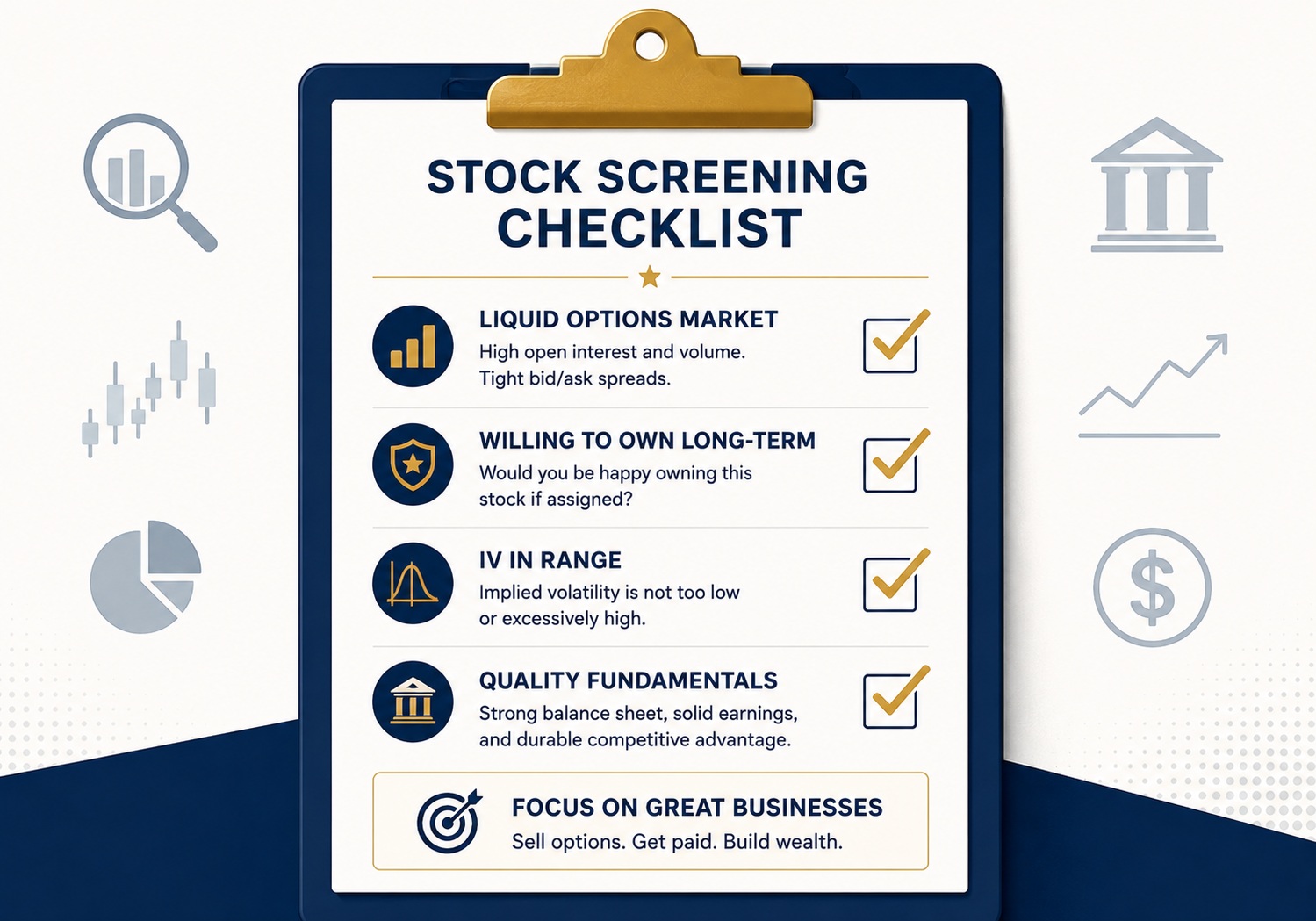
The Golden Rules of Wheel Stock Selection
First, you must be willing to own the stock. That does not mean you love it forever; it means assignment would fit your account, risk tolerance, and thesis. Second, options liquidity must be strong enough that spreads are not quietly eating your income.
Third, implied volatility should be meaningful but not reckless. Fourth, the stock price should fit your account size. Fifth, the company should be fundamentally sound enough that a drawdown is a problem to manage, not a thesis-ending surprise.
Sectors That Tend to Work Well
Large, liquid companies in technology, consumer, financial, healthcare, and broad-market ETFs often appear on Wheel watchlists because their options markets are active. The specific ticker matters less than the combination of quality, liquidity, and valuation.
Some traders prefer ETFs because single-company risk is lower. Others prefer individual stocks because premiums can be richer. Both approaches require position sizing and a clear plan.
Stocks to Avoid
Avoid stocks where the premium exists mainly because the business is distressed or the next event is binary. Earnings-driven momentum stocks, early-stage biotech, penny stocks, and meme names can look attractive until one gap wipes out months of premium.
Very low implied volatility stocks can also be poor candidates because the premium may not justify the capital. A quiet blue chip is not automatically a good Wheel trade if the option market pays almost nothing.
How to Screen for Wheel Candidates
Start with a list of companies or ETFs you understand. Check options volume, open interest, bid-ask spreads, upcoming earnings, implied volatility rank or percentile, and the amount of cash needed for one contract.
A practical screen should produce a watchlist, not an automatic trade. The final decision still depends on price level, chart context, valuation, and your account exposure.
Building a Watchlist
A good watchlist is smaller than most people think. Ten to twenty names you understand are often more useful than a hundred tickers you barely know. Track preferred entry zones, upcoming earnings dates, and typical premium levels.
Review the list weekly. Remove names when the thesis deteriorates or spreads widen. Add names only after you know why they deserve capital.
Position Sizing - How Much to Allocate per Stock
Many traders limit a single Wheel position to 5% to 10% of account value, and smaller accounts may need to be even more selective. Concentration is what turns assignment from a routine outcome into a crisis.
Keep cash reserves. The Wheel works better when you are not forced to react from a fully deployed account during a volatile week.
Want the Complete Playbook?
Spin the Wheel, Cash the Checks by Logan Sterling walks you through every step of the Wheel strategy - from stock selection to trade management - with real examples and a repeatable system you can start using immediately.
View on Amazon